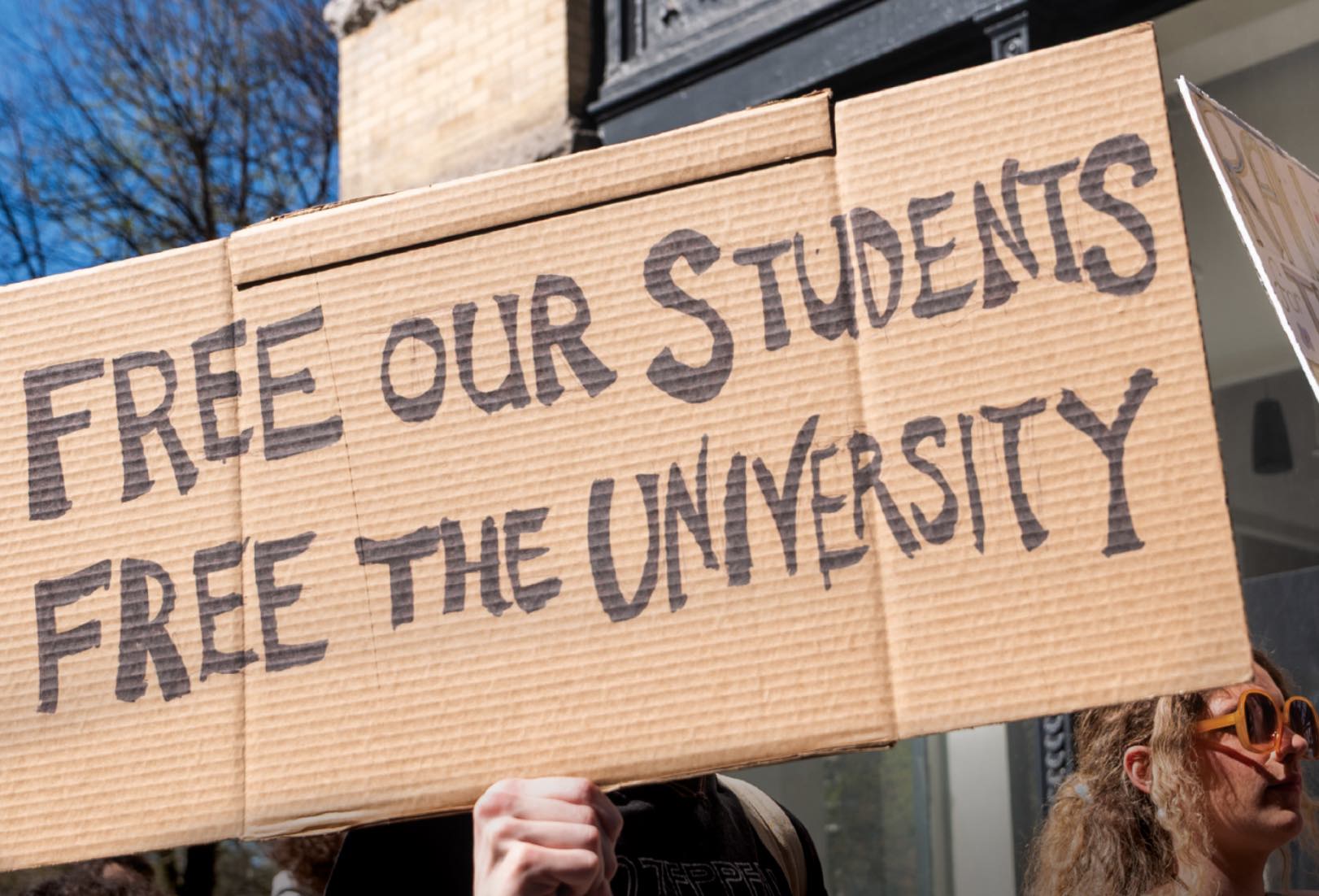
Academic freedom is deteriorating sharply in India, where new university rules curbing student expression, politically driven censorship, and rising campus intimidation have placed the country among ten nations rated “completely restricted”, according to a new global report by Scholars at Risk (SAR).
The Free to Think 2025 report, released by the New York–based academic freedom watchdog, documents 395 attacks on scholars, students and universities in 49 countries between July 2024 and June 2025. It warns that higher education worldwide is “under siege”—not only in authoritarian states but increasingly in democracies.
“From Afghanistan to Serbia to the United States, state leaders have cracked down on student and faculty expression, banned the study of disfavoured topics, and targeted individual scholars for what they teach, study or say,” said Robert Quinn, SAR’s executive director.
India: silencing dissent on campus
In India, SAR records an alarming rise in restrictions on student speech and political expression. A number of universities have banned discussions, demonstrations or sloganeering without prior authorisation, often at the direction of authorities aligned with the ruling Bharatiya Janata Party.
The report cites multiple incidents reflecting growing intolerance of dissent. In one, individuals affiliated with Hindu nationalist groups assaulted a Dalit professor at Sri Venkateswara University, accusing him of “promoting Christianity”. In another, the Rashtriya Swayamsevak Sangh (RSS), the ideological parent of the BJP, intervened to halt a film festival at Rabindranath Tagore Medical College despite prior approval.
It also notes reports that three scientists were removed from the shortlist for the Rashtriya Vigyan Puraskar national science award in September 2024 after they criticised government policies. Meanwhile, at the University of Delhi, proposed syllabus changes have sought to eliminate papers on religious nationalism, caste, and LGBTQ+ studies—moves that critics say amount to ideological cleansing.
“We’re seeing discrimination in how student groups are treated,” said Maya John, a history teacher and member of Delhi University’s academic council. “Campuses that once fostered debate now resemble policed zones under constant surveillance.”
The Academic Freedom Index (AFi) cited by SAR classified India as “completely restricted” in 2024, joining Afghanistan, China, Iran, and Türkiye among the world’s most repressive environments for academic freedom.
Democracies in decline
The report also highlights a marked deterioration in the United States following the re-election of Donald Trump. SAR recorded around 40 incidents in the first half of 2025 alone, including attempts to revoke university funding, detain and deport international scholars—often for pro-Palestinian views—and ban diversity, equity and inclusion programs.
Quinn described these developments as “unprecedented”, warning that “for the first time, a global research and innovation superpower has voluntarily dismantled the infrastructure underpinning its leadership.”
Cuts to US research funding have had ripple effects worldwide, disrupting academic projects in countries including Australia, Egypt, Malawi, Portugal, South Africa and the United Kingdom.
Even in Australia and parts of Europe, SAR reports growing political pressure on universities and student activists over positions on global conflicts and migration.
Global flashpoints
Beyond India and the US, Free to Think 2025 details violent crackdowns on student-led protests in Bangladesh, Georgia and Serbia, where police used live ammunition and mass arrests to suppress dissent. In Bangladesh, the student movement for job quota reform turned deadly, leaving up to 1,400 people killed.
The report also notes the collapse of Gaza’s higher education system under Israeli bombardment, and the forced militarisation of universities in Ukraine, where students now face compulsory military training.
“An opportunity for solidarity”
SAR’s advocacy director Clare Robinson said that despite grim global trends, the moment also offered a chance for collective action.
“Protecting higher education requires the sector to better communicate the value of academic freedom to the public, reject isolationism, and secure formal legal protections for academic autonomy,” she said.
The report concludes that defending universities is essential to defending democracy itself. “Critical discourse is not disloyalty,” SAR writes. “Ideas are not crimes. Everyone must be free to think, question, and share their ideas.”
Source: Free to Think 2025: Report of the Scholars at Risk Academic Freedom Monitoring Project (September 2025)